
Zapotec Civilization: History, Culture, Religion, and Contributions
The Zapotec Civilization was one of the earliest and most influential ancient civilizations of Mesoamerica, flourishing in the Valley of Oaxaca in present-day southern Mexico. Known for its early centralized governance, monumental architecture, religious traditions, and innovations in writing and calendars, the Zapotec civilization laid the foundations for later Mesoamerican societies.
Geographical Setting and Environmental Adaptation
The Zapotecs inhabited the Valley of Oaxaca, a high-elevation region surrounded by mountains. Despite limited rainfall, the region supported agriculture through an advanced system of irrigation drawing water from the Atoyac River and its tributaries. This strategic adaptation to the environment enabled stable food production and population growth, making the valley a cradle of early complex society.
The region’s defensible terrain also played a key role in political consolidation, allowing the Zapotecs to establish long-lasting control over surrounding areas.
Transition from Hunter-Gatherers to Agricultural Society
The Zapotec civilization emerged gradually from hunter-gatherer communities around 1500 BCE. Over time, they adopted sedentary agriculture, cultivating crops such as maize, beans, and squash. This agricultural surplus supported population expansion and occupational specialization.
As their society became more complex, the Zapotecs developed notable skills in weaving, pottery, and stone masonry. Zapotec pottery is distinguished by its geometric designs, while their stonework demonstrates advanced architectural planning and craftsmanship.
Rise of Monte Albán and Political Organization
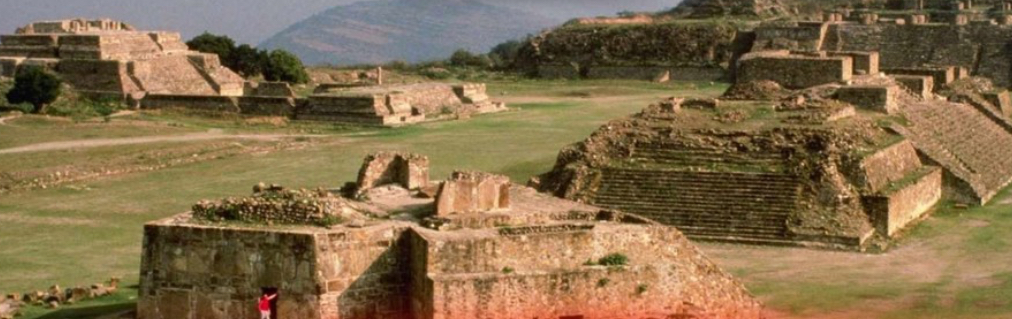
By the Classic period (200 BCE–100 CE), the Zapotecs established one of the earliest centralized states in Mesoamerica. Their capital city, Monte Albán, was built atop a flattened mountain overlooking the Oaxaca Valley, symbolizing political and religious authority.
Monte Albán featured plazas, pyramids, temples, ball courts, and elite residences, reflecting a highly organized urban layout. The city served as the administrative, ceremonial, and military center of the Zapotec state.
Zapotec society was marked by a clear social hierarchy, with nobles, priests, warriors, artisans, and farmers occupying distinct social roles. Political power was concentrated among the ruling elite, supported by religious authority.
Religion, Priesthood, and Ritual Practices
Religion was central to Zapotec life. The civilization maintained a professional priesthood and a state-sponsored religion that legitimized political authority. Zapotec deities were closely linked to natural forces such as rain, fertility, and the earth.
Religious rituals included complex ceremonies and human sacrifice, particularly during important calendrical events or times of crisis. These practices were believed to maintain cosmic balance and ensure agricultural fertility.
Writing System and Calendar Innovations
One of the Zapotec civilization’s most significant contributions to Mesoamerican culture was the development of an early writing system, visible in inscriptions at Monte Albán. These glyphs were used to record events, genealogies, and conquests.
The Zapotecs also made advancements in calendar systems, contributing to the broader Mesoamerican tradition of ritual and solar calendars. These calendars regulated agricultural cycles, religious festivals, and political ceremonies.
Legacy and Historical Significance
The Zapotec state represents one of the earliest examples of centralized government in Mesoamerica. Its political institutions, religious traditions, and cultural innovations influenced later civilizations such as the Mixtecs and Aztecs.
Even today, Zapotec communities continue to exist in Oaxaca, preserving elements of their language, traditions, and identity. Archaeological sites like Monte Albán stand as enduring symbols of Zapotec ingenuity and statecraft.
Conclusion
The Zapotec civilization was a pioneering force in ancient Mesoamerica. Through effective environmental adaptation, centralized governance, religious authority, and cultural innovation, the Zapotecs created a complex society that shaped the historical trajectory of the region. Their legacy remains vital for understanding the origins of civilization in the Americas.
yes/No